
troy bilt rototiller manual
Troy-Bilt Rototiller Manual: A Comprehensive Guide
This manual delves into the history, operation, maintenance, and troubleshooting of Troy-Bilt rototillers,
from their inception in 1962 through the Lyman P. Wood era and beyond.
Explore detailed model overviews, engine specifications, and crucial parts information,
including fuel tank and wheel bearing seal compatibility, ensuring your tiller’s longevity.
Understanding Troy-Bilt Rototiller History
Troy-Bilt’s story began in 1962, blossoming from Garden Way’s innovative approach to gardening. Initially, these rototillers weren’t mass-produced; instead, they were assembled with a focus on durability and user-friendliness, quickly gaining a loyal following. The early models, produced up to 1982, represent a foundational period for the brand, characterized by continuous refinement and a commitment to quality.
A pivotal figure in Troy-Bilt’s development was Lyman P. Wood, whose leadership significantly shaped the company’s trajectory. His era witnessed key innovations, including the iconic “Horse” series, designed for larger gardens and renowned for their robust construction. Production milestones, like the final Horse II in September 1982 and the impressive 217,306 Horse III units, demonstrate the tiller’s popularity.
The introduction of Operator Presence Controls (O;P.C.) marked a leap in safety features, showcasing Troy-Bilt’s dedication to user protection. Resources like “The Lyman P. Wood Story” and “Gardening Beyond the Plow” offer deeper insights into this formative period.
Early Troy-Bilt Models & Production Dates (1962-1982)
The initial production of Troy-Bilt rototillers commenced in April 1962, with serial number 101. This marked the beginning of a legacy built on robust garden tools. Production steadily increased, reaching serial number 372 by April 1963, and further expanding to 721 by April 1964. By April 1965, production had surpassed 1132 units, indicating growing demand for these innovative tillers.
These early models weren’t simply machines; they represented a shift in gardening practices, offering a more efficient alternative to manual labor. The period up to February 27, 1982 – the date Lyman Wood departed Troy-Bilt – saw continuous improvements and refinements. September 15, 1982, signified the end of Horse II production, and the subsequent focus shifted towards the Horse III.
The Horse III, with a total production run of 217,306 units, became a cornerstone of the Troy-Bilt lineup. These dates and numbers highlight a period of significant growth and innovation for the company, laying the groundwork for future advancements.
The Lyman P. Wood Era & Key Innovations
Lyman P. Wood’s tenure at Troy-Bilt, concluding on February 27, 1982, was a period of transformative innovation. He spearheaded advancements that cemented Troy-Bilt’s reputation for quality and durability. A pivotal development during his leadership was the introduction of Operator Presence Controls (O.P.C.). The first test run of these safety controls occurred, prioritizing user safety and setting a new industry standard.
Wood’s vision extended beyond safety features; he fostered a culture of continuous improvement in design and manufacturing. His influence is detailed in “The Lyman P. Wood Story” by Roger Griffith, offering insights into his leadership philosophy. Simultaneously, publications like Dean Leith Jr.’s “Gardening Beyond the Plow” showcased the practical benefits of Troy-Bilt’s technology.
These innovations weren’t merely technical upgrades; they reflected a commitment to empowering gardeners and simplifying the cultivation process. Wood’s legacy continues to resonate in modern Troy-Bilt tillers, embodying a dedication to performance and user experience.
Troy-Bilt Horse Models: A Detailed Overview
Troy-Bilt Horse tillers, renowned for their robust construction and suitability for large gardens, have garnered a loyal following since their introduction. These machines were built to endure, offering years of reliable service. Production spanned several iterations, including the Horse II, with the last unit manufactured on September 15, 1982. The Horse III followed, achieving a substantial production run of 217,306 units.
Identifying your specific Horse model is crucial for parts replacement and maintenance. Knowing the model number allows for accurate sourcing of components. These tillers commonly utilized Briggs & Stratton engines, often 6 horsepower, powering their tilling capabilities. Many were also adapted for use with Craftsman tillers and Sears models.
The Horse series represents a significant chapter in Troy-Bilt’s history, embodying a commitment to providing gardeners with powerful and dependable tools. Their enduring popularity speaks to their quality and effectiveness.
Identifying Your Troy-Bilt Horse Model Number

Locating your Troy-Bilt Horse tiller’s model number is essential for accessing the correct parts diagrams, manuals, and support resources. This number is a unique identifier that specifies the exact configuration of your machine. Typically, the model number is found on a decal affixed to the tiller’s frame. Common locations include the engine shroud, the rear of the unit, or near the steering handles.

The model number is often a combination of letters and numbers, such as 121000. Carefully inspect these areas, cleaning away any dirt or debris that may obscure the decal. Having the serial number, often listed alongside the model number, is also beneficial for determining the manufacturing date and specific features of your tiller.

Accurate identification ensures you order the right replacement parts, preventing compatibility issues and ensuring proper functionality. Online resources and Troy-Bilt’s support team can assist if you encounter difficulty locating the number.
Engine Specifications: Briggs & Stratton Power
Troy-Bilt Horse tillers predominantly utilize Briggs & Stratton engines, renowned for their durability and performance. Engine specifications vary depending on the specific model and production year. However, a common configuration features a 6 horsepower Briggs & Stratton engine, powering the tiller through demanding gardening tasks.
These engines are typically four-stroke, air-cooled, and gasoline-fueled. Understanding your engine’s specifications – including horsepower, displacement, and oil capacity – is crucial for proper maintenance and repair. Refer to your tiller’s original manual or the Briggs & Stratton engine documentation for precise details.
Regular oil changes, air filter cleaning, and spark plug replacement are vital for maintaining optimal engine performance. Always use the recommended oil type and follow the manufacturer’s guidelines for service intervals. Proper engine care extends the life of your Troy-Bilt tiller and ensures reliable operation.
Common Troy-Bilt Rototiller Parts & Replacements
Maintaining a Troy-Bilt rototiller often requires replacing worn or damaged parts. Common replacements include fuel tank seals (like 1738433 and 935-0149) to prevent fuel leaks, and wheel bearing seals (GW-9602, GW-9616, GW-9618) to ensure smooth wheel operation. These seals are critical for preventing contamination and maintaining optimal performance.

Other frequently replaced parts encompass belts, tines, and shear bolts. Identifying the correct part number is essential for a proper fit and function. Online parts diagrams and assistance are readily available (see resources section). When replacing parts, always disconnect the spark plug wire for safety.
Regular inspection of these components can prevent more significant issues down the line. Investing in quality replacement parts ensures the longevity and efficiency of your Troy-Bilt rototiller, keeping your garden work productive and hassle-free.
Fuel Tank Seals & Compatibility (e.g., 1738433, 935-0149)
Fuel tank seals are vital for preventing fuel leaks in Troy-Bilt rototillers, ensuring safe and efficient operation. Common part numbers include 1738433 and 935-0149, designed for specific models. These seals typically feature dimensions of 3/8 inch outer diameter and 1-1/16 inch inner diameter, with a height of 5/8 inch, fitting a 33/64 diameter tank hole.
Compatibility varies, so verifying the correct seal for your model is crucial. Using the wrong seal can lead to leaks and potential fire hazards. These seals are often sold in packs of five, providing spares for future maintenance. Proper installation involves cleaning the tank opening and carefully seating the new seal.
Regularly inspect the fuel tank seal for cracks or deterioration. Replacing a worn seal is a simple yet important maintenance task that can save you from costly repairs and ensure your rototiller runs smoothly.
Wheel Bearing Seals & Replacements (GW-9602, GW-9616, GW-9618)
Maintaining wheel bearing seals is essential for smooth rototiller operation and preventing damage to the wheel bearings themselves. Troy-Bilt utilizes several seal part numbers, including GW-9602, GW-9616, and GW-9618, often interchangeable for various models. These seals protect the bearings from dirt, debris, and moisture, extending their lifespan.
When replacing wheel bearing seals, ensure the correct part number is used for optimal fit and performance. Worn or damaged seals can lead to bearing failure, resulting in difficult maneuvering and costly repairs. Replacement typically involves removing the wheel, accessing the bearing, and carefully installing the new seal.
Regularly inspect the seals for signs of wear or leakage. Replacing them proactively is a simple maintenance step that can significantly improve the longevity and functionality of your Troy-Bilt rototiller’s wheel assemblies.

Rototiller Operation & Safety Guidelines
Safe operation of your Troy-Bilt rototiller is paramount. Always read and understand the complete operator’s manual before use. Before starting, clear the work area of stones, debris, and people. Wear appropriate safety gear, including sturdy footwear, eye protection, and hearing protection.

Engage the rototiller only when the tines are clear of obstructions. Never operate the machine at a running speed faster than a walk. Be mindful of bystanders and maintain a safe distance. Avoid operating on steep slopes to prevent rollovers.
Crucially, never attempt to adjust or repair the rototiller while the engine is running. Disconnect the spark plug wire before performing any maintenance. Always disengage the tines and shut off the engine before leaving the machine unattended. Following these guidelines ensures a safe and productive tilling experience.
Troubleshooting Common Issues
Encountering problems with your Troy-Bilt rototiller? Several issues are commonly reported. If the engine fails to start, check the fuel level, spark plug, and air filter. A clogged air filter restricts airflow, hindering performance. For difficult starting, ensure fresh fuel is used and the choke is properly engaged.
If the tines aren’t rotating, inspect the drive belt for damage or looseness. A broken belt will prevent tilling. Excessive vibration can indicate unbalanced tines or worn bearings. Address these promptly to avoid further damage.
Fuel leaks often stem from deteriorated fuel lines or tank seals (like 1738433 or 935-0149). Always replace worn parts. If issues persist, consult a qualified mechanic or refer to detailed parts diagrams for assistance. Regular maintenance minimizes these common problems.
Maintenance Schedules & Best Practices
Prolonging your Troy-Bilt rototiller’s life requires a consistent maintenance schedule. After each use, clean debris from the tines and housing. Regularly check and tighten all bolts and fasteners. Annually, change the engine oil – Briggs & Stratton engines benefit from fresh oil for optimal performance.
Inspect the spark plug, replacing it as needed. Clean or replace the air filter to ensure proper airflow. Examine the fuel lines and seals (parts like 1738433 and 935-0149) for cracks or leaks, replacing them proactively. Lubricate moving parts, including wheel bearings (using seals GW-9602, GW-9616, or GW-9618), to reduce friction.
Winterize your tiller by draining the fuel tank and carburetor to prevent fuel degradation. Store it in a dry, sheltered location. Following these best practices ensures reliable operation for years to come.
Understanding Troy & Its Historical Context (Briefly)
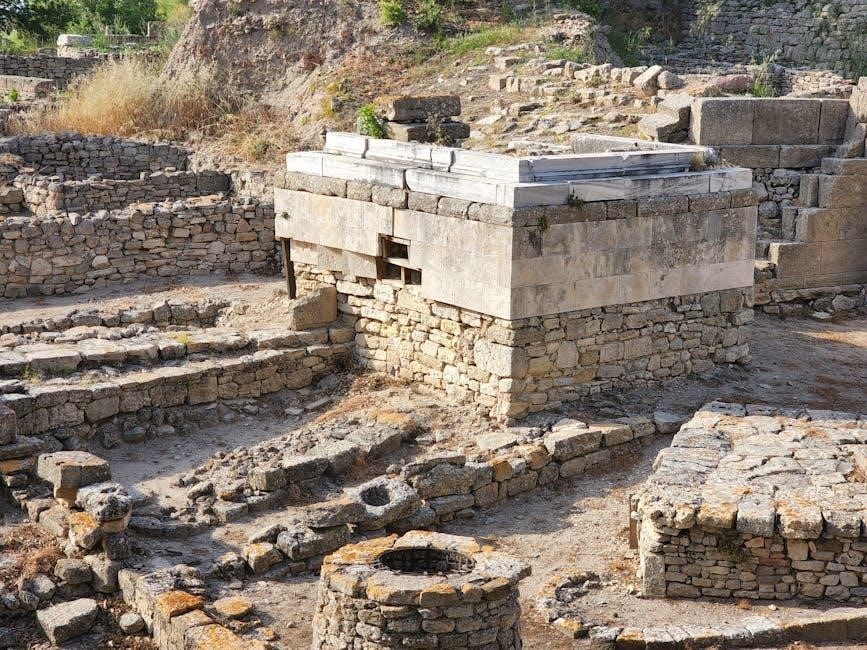
The name “Troy-Bilt” evokes the legendary city of Troy, immortalized in Homer’s Iliad. This ancient city, located in present-day Turkey, was a center of civilization for millennia, experiencing nine distinct layers of settlement (Troy I through Troy IX) beginning around 3600 BC. The epic Trojan War, sparked by the abduction of Helen, Queen of Sparta, by Trojan prince Paris, became a cornerstone of Greek mythology.
While the rototiller’s origins are far removed from the Bronze Age conflict, the name deliberately connects the machine to themes of strength, endurance, and overcoming challenges – qualities desired in a robust gardening tool. The 1962 founding of Troy-Bilt coincided with a renewed public interest in the story of Troy, fueled by the 2004 release of the Oscar-nominated film depicting the war.
This historical allusion aimed to imbue the brand with a sense of legacy and quality.
The Iliad & The Trojan War: A Cultural Reference
Homer’s Iliad, an ancient Greek epic poem, recounts the decade-long siege of Troy by the Achaean (Greek) forces. The war began after Paris, a Trojan prince, abducted Helen, the wife of Menelaus, King of Sparta. This act ignited a conflict involving legendary heroes like Achilles, Hector, and Agamemnon, and ultimately led to the fall of Troy.
The story is steeped in mythology, divine intervention, and themes of honor, fate, and the consequences of war. It has profoundly influenced Western literature, art, and culture for centuries, serving as a powerful narrative of human conflict and resilience. The tale’s enduring popularity is evident in its continued retelling, including the 2004 film adaptation starring Brad Pitt.
Troy-Bilt’s deliberate association with this epic suggests a commitment to enduring quality and tackling formidable tasks, mirroring the challenges faced during the Trojan War.
Troy Archaeological Layers: A Historical Timeline (Troy I ‒ Troy IX)
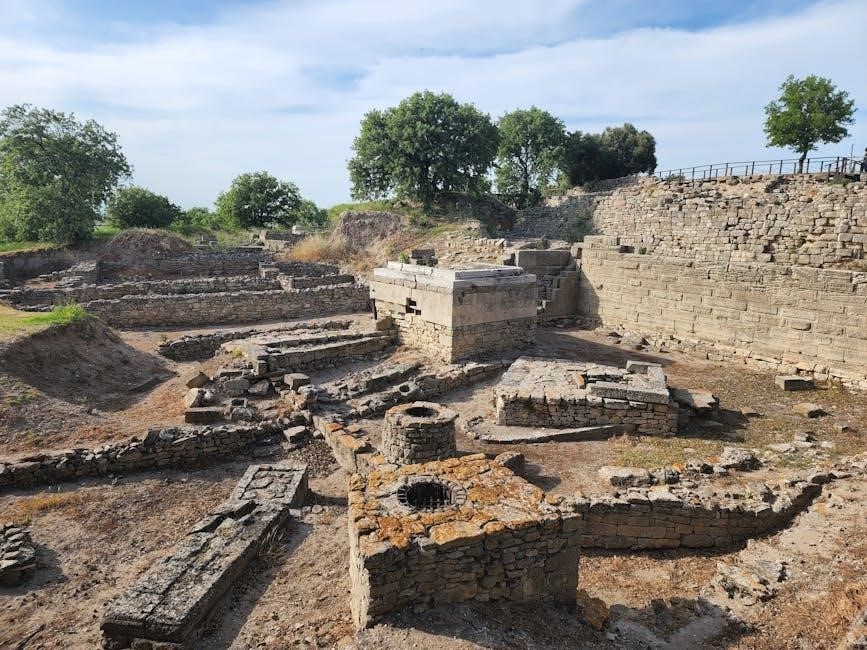
Archaeological excavations at the site of ancient Troy, located in modern-day Turkey, have revealed nine major layers of settlements, designated Troy I through Troy IX. These layers represent successive occupations spanning millennia, beginning around 3600 BC with Troy I, a small, fortified city. Over time, Troy evolved, experiencing periods of growth, destruction, and rebuilding.
Troy II, dating to around 3000 BC, showcased increased fortification and evidence of wealth. Later layers, including Troy VI and VII, are often associated with the Homeric Troy described in the Iliad, though definitive proof remains elusive. Each layer provides valuable insights into the region’s history, culture, and technological advancements.
The layered structure of Troy mirrors the enduring legacy of Troy-Bilt rototillers – built upon decades of innovation and continuous improvement, each model representing a new ‘layer’ of performance.
Resources for Troy-Bilt Rototiller Manuals & Support
Locating comprehensive information for your Troy-Bilt rototiller is crucial for maintenance, repair, and optimal performance. Numerous online resources offer manuals, parts diagrams, and troubleshooting assistance. Official Troy-Bilt websites provide access to a vast library of documentation, searchable by model number.
Dedicated online forums and communities, populated by experienced Troy-Bilt owners, offer invaluable advice and support. Websites specializing in small engine repair often feature detailed guides and exploded views of rototiller components. Furthermore, retailers like Sears (historically a major distributor) may retain archived manuals.
Don’t overlook publications like “Gardening Beyond the Plow” and “The Lyman P. Wood Story” for historical context and insights into the brand’s evolution. Utilizing these resources ensures your Troy-Bilt continues to deliver reliable service for years to come.
Finding Parts Diagrams & Online Assistance
Accessing detailed parts diagrams is essential when repairing or restoring a Troy-Bilt rototiller. Several online platforms specialize in providing exploded views, showcasing every component from the engine to the tines. These diagrams are typically searchable by model number, ensuring accuracy.
Websites dedicated to small engine parts frequently offer interactive diagrams, allowing users to click on individual parts to identify them and check availability. YouTube channels featuring rototiller repair tutorials can visually guide you through disassembly and reassembly processes. Online forums dedicated to Troy-Bilt tillers are also invaluable, offering peer-to-peer assistance and troubleshooting advice.

Remember to utilize the model number (e.g., 121000) when searching for parts or diagrams. This ensures you obtain the correct components for your specific Troy-Bilt rototiller, simplifying the repair process and maximizing efficiency.