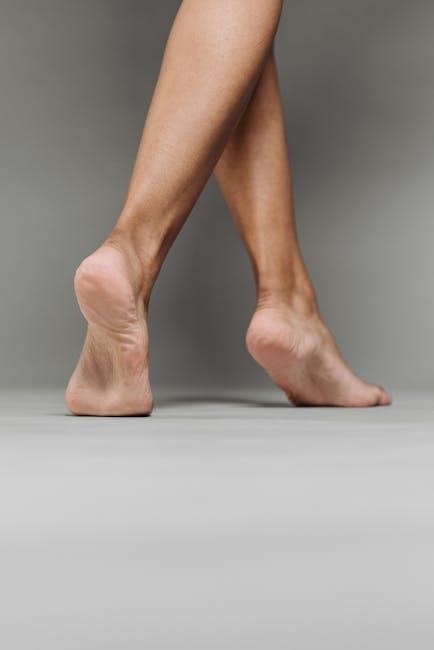
posterior tibial tendon dysfunction exercises pdf
Understanding Posterior Tibial Tendon Dysfunction (PTTD)
PTTD develops from gradual tendon strain, often due to overuse, and can lead to arch collapse.
Effective management involves activity adjustments, targeted exercises, and professional guidance, potentially utilizing PDF resources.
What is PTTD?
PTTD, or Posterior Tibial Tendon Dysfunction, signifies a condition where the posterior tibial tendon – crucial for supporting the foot’s arch – becomes inflamed or torn. This vital tendon connects the calf muscle to the inner side of the foot, enabling inward and downward movements.
Over time, repetitive strain or injury can weaken this tendon, leading to a gradual flattening of the arch. While PDF exercise guides can aid in rehabilitation, understanding the core issue is paramount. Initially, symptoms manifest as pain along the inner foot and ankle, worsening with activity.

Left untreated, PTTD can progress, causing significant foot deformity and impacting gait. Early intervention, often involving a combination of rest, ice, and targeted exercises (detailed in PDF resources), is key to managing the condition and preventing further damage.
Causes and Risk Factors
PTTD rarely stems from a single traumatic event; it typically develops gradually due to repetitive stress on the posterior tibial tendon. PDF exercise programs aim to address the resulting weakness, but understanding the underlying causes is crucial.
Several factors increase susceptibility. Overuse, particularly in activities involving running or jumping, is a primary contributor. Pre-existing conditions like hypertension, obesity, and diabetes can compromise tendon health; Previous foot trauma, even seemingly minor, can also predispose individuals to PTTD.
Furthermore, prolonged exposure to corticosteroids has been linked to tendon weakening. While PDF guides offer exercises, addressing these risk factors – weight management, blood sugar control, and avoiding steroid use – is vital for long-term management and preventing recurrence.
Overuse and Strain
PTTD frequently arises from repetitive strain on the posterior tibial tendon, especially with activities like running, hiking, or sports. PDF exercise guides often emphasize gradual loading to rebuild tendon strength, but prevention is key.
Sudden increases in activity level or intensity without adequate conditioning can overwhelm the tendon’s capacity. Insufficient footwear support exacerbates the problem, failing to adequately distribute forces. Ignoring early warning signs – mild pain along the inner foot – allows the condition to progress.
PDF resources can provide targeted exercises, but addressing the root cause – modifying activity, improving footwear, and listening to your body – is paramount to prevent further strain and promote healing.
Hypertension, Obesity, and Diabetes
PTTD risk is significantly elevated in individuals with hypertension, obesity, and diabetes due to compromised blood flow and tissue health. These conditions impair the tendon’s ability to heal and withstand stress. PDF exercise guides should be approached cautiously, prioritizing low-impact movements.
Diabetes, in particular, can cause neuropathy, reducing sensation and increasing the risk of unnoticed injury. Obesity adds excessive load on the tendon, accelerating degeneration. Hypertension impacts circulation, hindering nutrient delivery crucial for tendon repair.
PDF resources should emphasize exercises adaptable to individual limitations, alongside medical management of these underlying health conditions for optimal outcomes.
Previous Trauma & Steroid Exposure
Prior foot or ankle injuries, such as fractures or sprains, increase PTTD susceptibility by disrupting tendon integrity. Similarly, prolonged steroid use—even topical applications—weakens tendons, making them vulnerable to damage. PDF exercise programs must acknowledge this pre-existing vulnerability.
Individuals with a history of trauma require a more gradual progression, focusing on restoring range of motion before strengthening. Steroid-induced tendonopathy demands careful exercise selection, avoiding high-impact activities.
PDF guides should clearly state contraindications for those with trauma or steroid exposure, advising consultation with a healthcare professional before starting any exercise regimen.

Symptoms of PTTD
PTTD presents with medial foot pain, often worsening with activity, and progressive arch collapse. PDF exercise guides can help manage these symptoms effectively;
Pain Location
Pain associated with PTTD is typically experienced on the inside of the foot, specifically along the path of the posterior tibial tendon. This discomfort often intensifies with activity, such as walking, running, or standing for prolonged periods. Individuals may also report tenderness when the tendon is directly touched.
As the condition progresses, pain can radiate to other areas of the foot and ankle. Understanding the precise location of pain is crucial for accurate diagnosis and targeted treatment. PDF exercise guides often emphasize exercises designed to alleviate pain in this specific region, focusing on strengthening the supporting muscles and restoring proper foot mechanics. Early intervention, guided by resources like PTTD exercise PDFs, can help manage discomfort and prevent further deterioration.
Foot Arch Collapse
A hallmark of PTTD is the progressive flattening of the foot’s arch. Initially, this may present as a subtle lowering, but over time, it can lead to a complete collapse, resulting in a flatfoot deformity. This arch collapse alters foot biomechanics, causing pain and instability.
PDF exercise guides for PTTD frequently prioritize exercises aimed at restoring and supporting the arch. These include strengthening the posterior tibial tendon and surrounding muscles. Addressing arch collapse early, with consistent exercise routines detailed in PTTD PDFs, is vital to prevent further complications and maintain mobility. Ignoring this symptom can lead to chronic pain and functional limitations.

Exercises for PTTD – A Comprehensive Guide
PTTD exercise programs, often found in PDF formats, progress through phases: pain reduction, strengthening, proprioception, and advanced functional movements for optimal recovery.
Phase 1: Early Stage – Pain Reduction & Inflammation Control

Initial management, often detailed in PTTD exercise PDFs, focuses on minimizing pain and inflammation. Rest and activity modification are crucial; avoid activities that aggravate symptoms. Ice application, typically 15-20 minutes several times daily, helps reduce swelling and discomfort.
PDF guides emphasize gentle range-of-motion exercises to maintain joint flexibility without stressing the tendon. These early-stage exercises are not about building strength, but about creating a foundation for later phases. Prioritize pain-free movement; any increase in pain signals the need to reduce intensity or modify the exercise. Consistent adherence to these initial steps, as outlined in reliable PDF resources, is vital for successful recovery.
Rest and Activity Modification
PTTD exercise PDFs consistently highlight the importance of rest and activity modification in the initial stages. This doesn’t necessarily mean complete immobilization, but rather a strategic reduction in activities that exacerbate pain. Avoid high-impact exercises like running and jumping.
PDF guides often recommend substituting aggravating activities with lower-impact alternatives, such as swimming or cycling. Gradual progression is key; slowly reintroduce activities as pain subsides. Listen to your body – pain is a signal to reduce intensity. Detailed PDF resources provide specific guidelines on activity levels based on symptom severity, ensuring a safe and effective recovery process.
Ice Application
PTTD exercise PDFs universally recommend ice application to manage pain and inflammation. Apply an ice pack, wrapped in a thin towel, to the inner aspect of your ankle and foot for 15-20 minutes at a time. Repeat several times a day, especially after activity.
PDF guides emphasize that ice helps reduce swelling and discomfort, creating a more favorable environment for healing. Never apply ice directly to the skin to prevent frostbite. Many PDF resources detail proper icing techniques and frequency, often suggesting it alongside rest and activity modification as a foundational element of early-stage PTTD management.
Phase 2: Strengthening Exercises
PTTD exercise PDFs consistently progress to strengthening after initial pain reduction. These PDF guides focus on rebuilding the muscles supporting the foot and ankle. Key exercises include heel raises (seated and standing), toe raises, and inversion exercises using a resistance band.
PDF resources detail proper form and repetition schemes for each exercise, often suggesting 3 sets of 10-15 repetitions. Strengthening the tibialis posterior, calf muscles, and intrinsic foot muscles is crucial. PDFs often emphasize gradual progression, increasing resistance or repetitions as strength improves, avoiding re-injury.
Heel Raises
PTTD exercise PDFs frequently highlight heel raises as a foundational strengthening exercise. These are often categorized into seated and standing variations, detailed within the PDF guides. Seated heel raises isolate the calf muscles, while standing heel raises engage additional stabilizing muscles.
PDF instructions emphasize slow, controlled movements, focusing on a full range of motion. Typically, 3 sets of 10-15 repetitions are recommended, progressing to weighted heel raises as strength increases. Proper form, maintaining a straight back and controlled descent, is consistently stressed in these PTTD exercise PDFs.
Seated Heel Raises
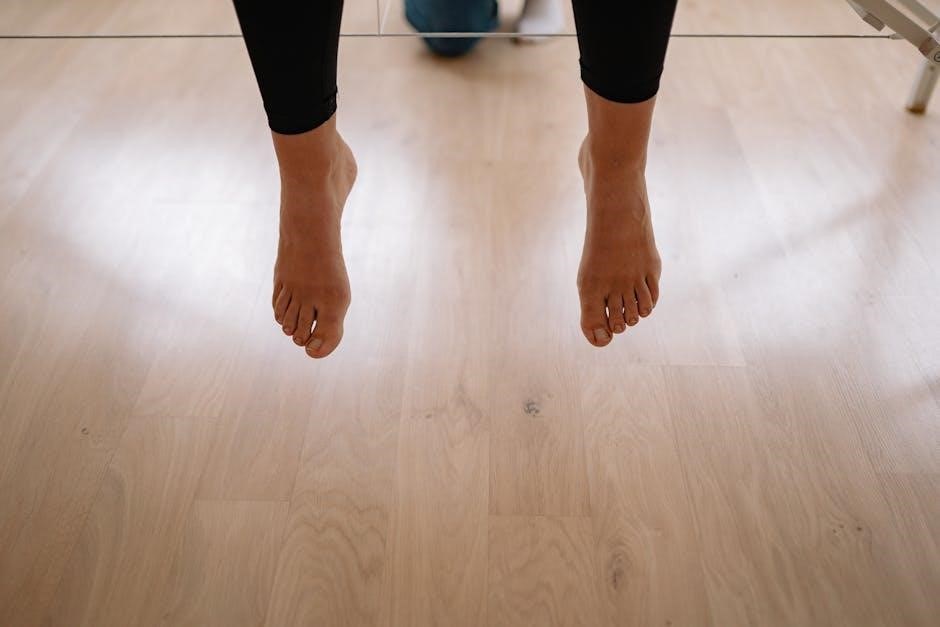
PTTD exercise PDFs detail seated heel raises as an excellent starting point for strengthening. Instructions typically show a seated position with feet flat, then lifting the heels off the ground while keeping the toes planted. PDF guides emphasize maintaining a controlled tempo, avoiding quick or jerky movements.
These PDF resources often suggest starting with 3 sets of 10-15 repetitions, gradually increasing the resistance with ankle weights as strength improves. Focus is placed on feeling the contraction in the calf muscles. PDF illustrations clearly demonstrate proper form, ensuring isolation of the targeted muscle group for effective PTTD rehabilitation.
Standing Heel Raises
PTTD exercise PDFs frequently include standing heel raises as a progression from seated variations. These guides illustrate performing the exercise by standing with feet flat, then slowly rising onto the balls of the feet, engaging the calf muscles. Maintaining balance is key, often utilizing a wall or chair for support initially.
PDF resources recommend 3 sets of 15-20 repetitions, emphasizing a slow, controlled movement. As strength increases, PDFs suggest performing the exercise on a slightly elevated surface to increase the range of motion. Proper form, as depicted in PDF illustrations, is crucial to avoid compensating with other muscle groups during PTTD recovery.
Toe Raises
PTTD exercise PDFs often incorporate toe raises to strengthen the anterior tibialis muscle, crucial for foot stability. These guides demonstrate sitting or standing with feet flat, then lifting the toes off the ground while keeping the heels planted. PDF resources emphasize maintaining a straight leg and avoiding arching the back.
PDF instructions typically recommend 3 sets of 15-20 repetitions, focusing on controlled movements. Progressive PDF plans may suggest adding resistance using a resistance band looped around the foot. Illustrations within PDFs highlight proper form to ensure effective muscle engagement during PTTD rehabilitation.
Inversion Exercises with Resistance Band
PTTD exercise PDFs frequently detail inversion exercises using a resistance band to strengthen the posterior tibialis. These PDF guides show securing the band around the foot and anchoring the other end. Patients then turn the sole of their foot inward, against the band’s resistance, focusing on controlled movement.
PDF resources often suggest 3 sets of 15-20 repetitions, gradually increasing band resistance as strength improves. Illustrations within PDFs emphasize maintaining a stable leg and avoiding compensation. Proper form, as detailed in PTTD rehabilitation PDFs, is vital for targeting the correct muscle group effectively.
Phase 3: Proprioceptive & Balance Exercises
PTTD exercise PDFs emphasize restoring proprioception – your body’s awareness of its position in space – through balance work. These PDF guides often start with single leg stance, progressing from 30-second holds. More advanced PDFs introduce balance board exercises, challenging stability in multiple planes.
PDF resources detail modifications, like using a chair for support initially. They highlight focusing on maintaining an upright posture and preventing the foot from rolling inward. PTTD rehabilitation PDFs stress consistent practice to improve neuromuscular control, crucial for preventing re-injury and regaining functional stability.
Single Leg Stance
PTTD exercise PDFs consistently feature the single leg stance as a foundational exercise. Instructions detail standing on the affected leg, maintaining balance for 30 seconds, and repeating several times. PDF guides often advise starting near a stable surface for support, gradually reducing reliance.
These PDF resources emphasize keeping the knee slightly bent and avoiding hip hiking or inward foot rolling. Progressions detailed in PTTD rehabilitation PDFs include performing the exercise with eyes closed or on an uneven surface. Focus is on controlled movements and building confidence in single-leg support.
Balance Board Exercises
PTTD exercise PDFs frequently incorporate balance board drills to enhance proprioception and stability. These PDF guides illustrate using a wobble board or rocker board, starting with small, controlled movements. Instructions emphasize maintaining a neutral foot position – avoiding excessive pronation or supination.
PDF resources detail progressing from two-footed to single-leg balance on the board. They often suggest incorporating gentle reaches in different directions while maintaining balance. Advanced PTTD PDFs may include dynamic movements, like tossing a ball, to challenge stability further. The goal is improved ankle and foot control.
Phase 4: Advanced Strengthening & Functional Exercises
PTTD exercise PDFs in this phase focus on building endurance and replicating real-life movements. PDF guides detail weighted calf raises, utilizing dumbbells or resistance bands, to increase the challenge. Walking heel-to-toe is a common exercise, improving gait mechanics and strengthening the tibialis posterior.
Many PDF resources suggest incorporating plyometric exercises, like controlled jumps, once sufficient strength is achieved. These PTTD PDFs emphasize proper form to prevent re-injury. Functional exercises, such as side shuffles and agility drills, are also included to prepare the foot and ankle for daily activities;
Calf Raises with Weight
PTTD exercise PDFs often detail calf raises with weight as a progression from bodyweight exercises. These PDF guides recommend starting with light dumbbells or a weighted vest, gradually increasing the resistance. Proper form is crucial: maintain a slow, controlled motion, focusing on full range of motion.
PDF resources emphasize keeping the knee slightly bent and avoiding bouncing. Variations, like single-leg calf raises with weight, are introduced for advanced strengthening. PTTD PDFs highlight the importance of feeling the muscle work throughout the exercise, ensuring correct muscle engagement and maximizing benefits.
Walking Heel-to-Toe
PTTD exercise PDFs frequently include heel-to-toe walking as a functional exercise to improve gait and balance. These PDF guides instruct patients to walk in a straight line, placing the heel of one foot directly in front of the toes of the other. Maintaining a slow, deliberate pace is key, focusing on controlled foot placement.
PDF resources often suggest starting with a short distance and gradually increasing it as strength improves. This exercise helps to retrain the posterior tibial tendon and improve proprioception. PTTD PDFs emphasize avoiding any limping or instability during the exercise, and suggest performing it on a level surface.

Importance of a Physical Therapy Guide
PTTD exercise PDFs are helpful, but a physical therapist provides personalized programs, ensuring correct form and progression for optimal recovery and preventing re-injury.
Professional Assessment
A thorough assessment by a physical therapist is crucial before starting any PTTD exercise program, even when utilizing PDF guides. This evaluation identifies the specific stage of your condition, pinpointing areas of weakness, limited range of motion, and pain.
The therapist will analyze your gait, foot structure, and muscle strength to create a tailored plan. They’ll determine if PDF-based exercises are appropriate for your current level and modify them as needed. A professional can also rule out other potential causes of your foot pain, ensuring an accurate diagnosis.
Self-treating solely with PDF resources risks improper form or progressing too quickly, potentially worsening the condition. A skilled therapist provides hands-on treatment and real-time feedback, maximizing the effectiveness of your rehabilitation.
Personalized Exercise Programs
While PTTD exercise PDF guides offer valuable routines, a truly effective approach is a program designed specifically for you. A physical therapist crafts this, considering your pain level, functional limitations, and progression.
Generic PDFs may not address your unique needs; a personalized plan ensures exercises are appropriately challenging and safe. It will likely progress through phases – pain reduction, strengthening, proprioception, and functional training – adapting based on your response.
The therapist will demonstrate correct form, preventing injury and maximizing benefits. They’ll also integrate the PDF exercises into a broader treatment plan, potentially including manual therapy and orthotic recommendations.

PDF Resources for PTTD Exercises
PTTD exercise PDF guides can supplement therapy, offering visual aids and routines. However, ensure the source is credible and provides progressive, clearly illustrated exercises.
Finding Reliable PDF Guides
Locating trustworthy PDF exercise guides for PTTD requires careful consideration. Numerous resources exist online, but quality varies significantly. Start by searching websites of reputable physical therapy organizations, hospital systems, or clinics specializing in orthopedic care. Look for PDFs created by licensed physical therapists or medical professionals.
Avoid guides from unknown sources or those lacking author credentials. University health centers often provide patient education materials, including exercise PDFs, which are generally reliable. Be cautious of websites promoting quick fixes or overly simplistic solutions. A good resource will acknowledge the complexity of PTTD and emphasize a progressive approach to rehabilitation. Prioritize PDFs that are regularly updated to reflect current best practices in physical therapy.
What to Look for in a PTTD Exercise PDF
A beneficial PTTD exercise PDF should prioritize clarity and safety. Clear instructions and detailed illustrations are essential for proper form, minimizing risk of injury. The plan should be progressive, starting with gentle exercises and gradually increasing intensity. Look for a guide that details proper warm-up and cool-down routines.

The PDF should specify frequency, repetitions, and sets for each exercise. It’s crucial that the guide emphasizes listening to your body and stopping if pain increases. A comprehensive PDF will address multiple phases of rehabilitation – pain reduction, strengthening, and proprioception. Finally, ensure the guide advises consulting a healthcare professional before starting any new exercise program.
Clear Instructions & Illustrations
When selecting a PTTD exercise PDF, prioritize resources offering exceptionally clear instructions. Ambiguity can lead to incorrect form, potentially worsening your condition. Each exercise should be broken down into simple, step-by-step directions, easily understood by individuals with varying levels of medical knowledge.
Complementing text, high-quality illustrations or even photographs are vital. Visual aids demonstrate proper body positioning and movement patterns. These visuals should be detailed enough to clearly show muscle engagement and joint alignment. A good PDF won’t assume prior knowledge; it will visually guide you through each stage of the exercise.
Progressive Exercise Plan
A valuable PTTD exercise PDF will feature a progressive exercise plan, acknowledging the need to gradually increase intensity. Starting with gentle, low-impact movements is crucial, especially in the early stages of recovery. The PDF should outline a phased approach, building strength and endurance over time.
Look for a plan that details how to advance exercises – perhaps by increasing repetitions, sets, or resistance. It should also indicate when it’s appropriate to move to more challenging variations, like weighted heel raises. A well-structured plan prevents re-injury and ensures consistent progress towards restoring foot function.

Long-Term Management of PTTD
PDF guides emphasize consistent exercise and orthotics for ongoing support. Maintaining a regular regimen prevents recurrence and preserves foot and ankle stability.
Orthotics and Arch Support
Orthotics play a crucial role in long-term PTTD management, working in conjunction with a dedicated exercise program outlined in many PDF resources. These supports help redistribute pressure, reducing strain on the compromised posterior tibial tendon. Custom or over-the-counter arch supports can effectively control foot pronation and prevent further arch collapse.
PDF guides often detail the types of orthotics suitable for different PTTD stages. Rigid orthotics are typically recommended for more severe cases, while softer, flexible supports may suffice for milder presentations. Consistent use, as emphasized in exercise PDFs, is vital. Remember, orthotics are not a cure but a supportive measure, best utilized alongside strengthening and proprioceptive exercises to achieve lasting relief and improved function.
Continued Exercise Regimen
Maintaining a consistent exercise regimen is paramount for long-term PTTD management, even after symptom improvement. Many PDF exercise guides emphasize this ongoing commitment. Strengthening the posterior tibial muscle, calf muscles, and intrinsic foot muscles remains crucial to support the arch and prevent recurrence.
PDF resources often provide progressive exercise plans, allowing gradual increases in intensity and complexity. Regularly performing heel raises, toe raises, and inversion exercises, as detailed in these guides, helps maintain strength and stability. Adherence to a home exercise program, supplemented by periodic professional check-ups, ensures continued success and minimizes the risk of PTTD progression.